
- Developer
- Meta Platforms, Inc.
- Installs
- 10B+
- Downloads
- 0
- Views
- 1
- Updated
- Nov 6, 2026
Screenshots
About Facebook
Facebook App Complete Guide: Feed, Groups, Marketplace, Meta AI and Privacy Settings Explained
Facebook is where real people propel your curiosity. Whether you are thrifting gear on Marketplace, showing reels to the group who gets it, or sharing laughs over fun images reimagined by AI, the app is built around the idea that a social network should help you make things happen.
What makes the app hard to explain to a newcomer is that it is no longer one product. It is a feed, a marketplace, a groups platform, a short-video service, a messaging service, an events calendar, and an AI assistant, all sharing a single profile and a single set of privacy controls. Most people use three or four of those features and ignore the rest, which is why the app feels either overwhelming or indispensable depending on who you ask.
This guide explains what each part of the app actually does, how the Feed personalisation works, how Groups and Marketplace fit together, what Meta AI is and what it is not, how messaging and calls behave, which profile and privacy settings are worth changing on day one, and which features are region-restricted. It is written for people who have had an account for years without ever touching the settings menu.
Facebook at a Glance
| Feature | Details |
|---|---|
| Type | Social network combining feed, groups, marketplace, video and messaging |
| Developer | Meta |
| Cost | Free to use |
| Core areas | Feed, Groups, Marketplace, Reels, Friends, Messenger, Notifications |
| AI features | Meta AI for questions and answers; generative AI for stickers and images |
| Communication | Text messaging, voice calls and video calls |
| Profile control | Audience settings per post, profile visibility, friend lists |
| Content creation | Reels from templates, full editing tools, Stories |
| Regional availability | Some features are not available in every country or region |
That last row matters more than it appears. Facebook regularly ships features to some regions before others, and a large number of "why can't I see this?" complaints are simply regional availability rather than a bug or a settings problem.
The Feed: How It Actually Works
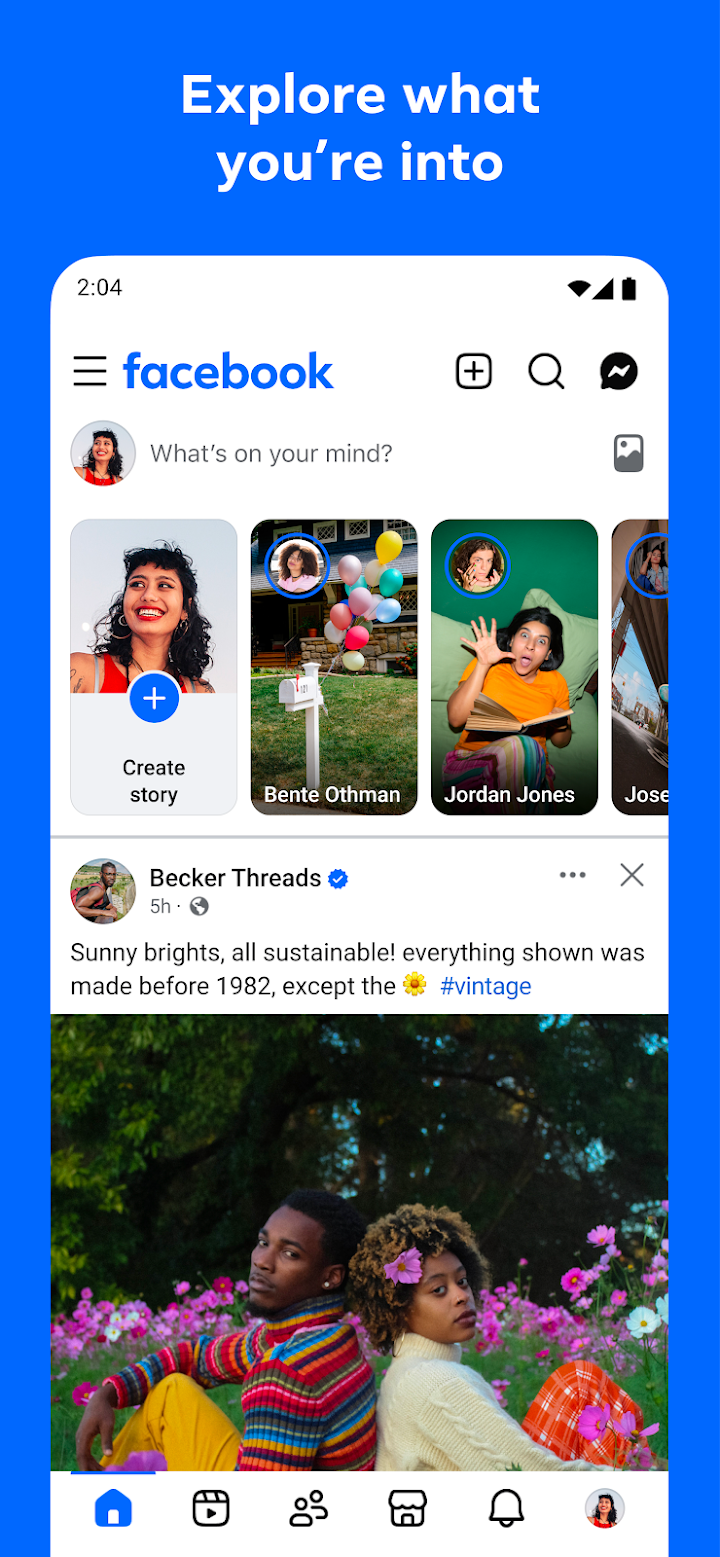
The Feed is the first thing most people open and the part they understand least. It is not chronological, and it is not a simple list of what your friends posted. It is a ranked selection of posts, reels, group activity, suggested content and advertising, ordered by what the system predicts you will engage with.
Facebook describes this as personalising your Feed to see more of what you like and less of what you don't. In practice, that means the Feed is trainable, and the controls are more useful than most people realise.
Controls Worth Knowing
| Control | What It Does | Where to Find It |
|---|---|---|
| Snooze | Hides a person or page for 30 days without unfriending | Three-dot menu on a post |
| Hide post | Shows fewer posts like that one | Three-dot menu on a post |
| Unfollow | Stops seeing someone's posts while staying friends | Profile menu |
| Favourites | Prioritises specific friends and pages in the Feed | Feed settings |
| Feed preferences | Manage who appears at the top and mute keywords | Settings and privacy |
The practical advice: if your Feed has become unpleasant, the fix is not to leave Facebook — it is to spend five minutes using Snooze, Unfollow and Hide. The Feed responds quickly, and unfollowing does not notify the person, which makes it far less socially awkward than unfriending.
Search and Interactive Results
Facebook's search has expanded well beyond finding people. Searching any topic now returns a mix of posts, groups, videos, marketplace listings and public discussions, presented as interactive results. It is genuinely useful for finding a group about a specific hobby or a local buy-and-sell community, and it is one of the most underused parts of the app.
Groups: The Part of Facebook That People Actually Stay For
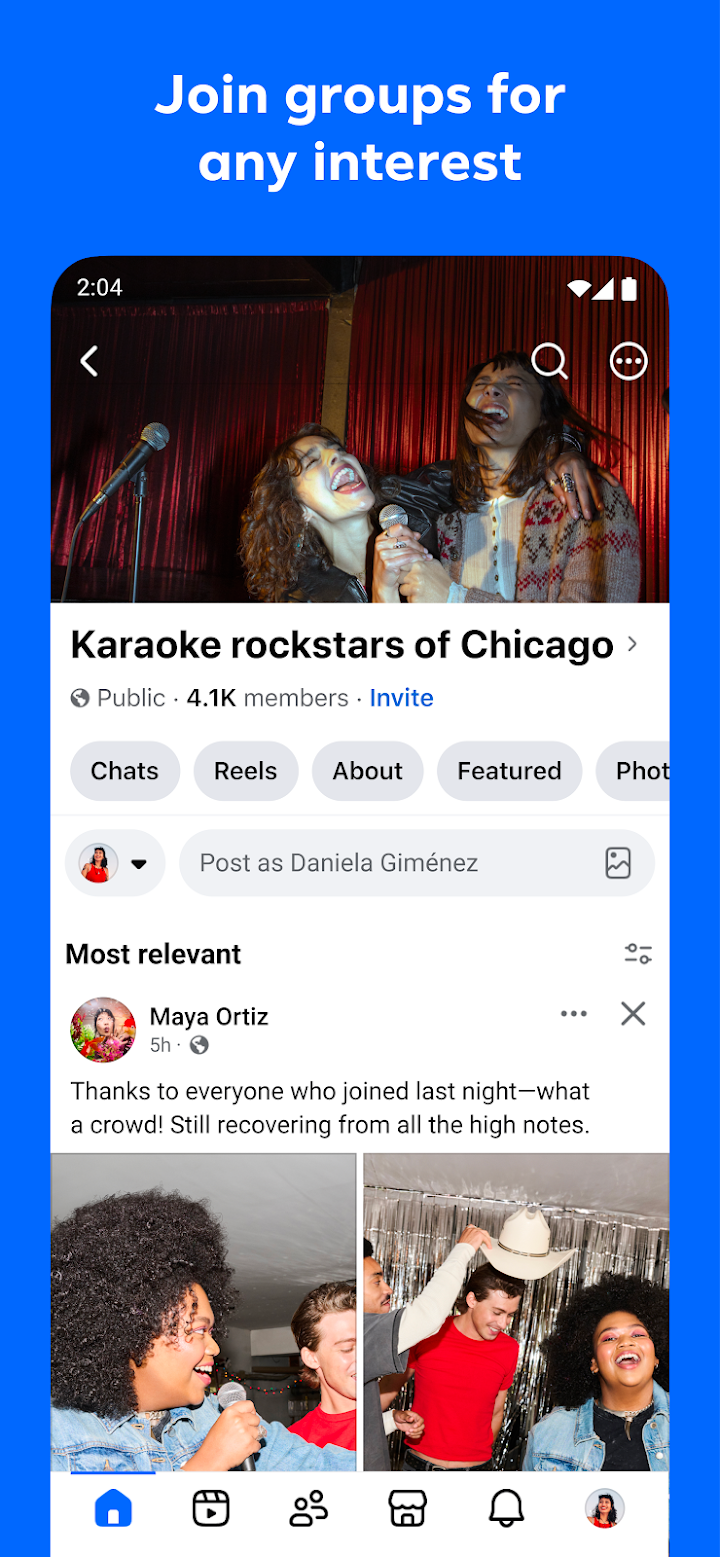
Groups are where Facebook is strongest. They let you join communities to learn tips from real people who have been there and done that — whether that is a local neighbourhood group, a hobby community, a support group, or a buy-and-sell group tied to Marketplace.
| Group Type | Privacy | Typical Use |
|---|---|---|
| Public group | Anyone can see members and posts | Hobby communities, local news, interest groups |
| Private group | Posts visible only to members; discoverable | Parenting groups, support groups, neighbourhood groups |
| Hidden group | Not discoverable in search | Invite-only communities, sensitive topics |
| Buy and sell group | Usually private | Local trading linked to Marketplace |
Why Groups Work Better Than Pages for Advice
A page broadcasts; a group converses. If you want a recommendation for a local plumber, a specific camera lens, or advice on a chronic illness, a group is far more likely to produce useful answers because members are peers rather than an audience.
Practical tips for groups:
- Read the pinned posts and rules first. Most group conflict comes from people posting without reading them.
- Use the search inside a group before asking a question. In large groups, the same question is often answered weekly.
- Check the group's age and activity. A group with 50,000 members but three posts a week is less useful than one with 2,000 active members.
- Leave groups that no longer serve you. Muted groups still clutter your group list and occasionally surface in notifications.
Marketplace: Buying and Selling Locally
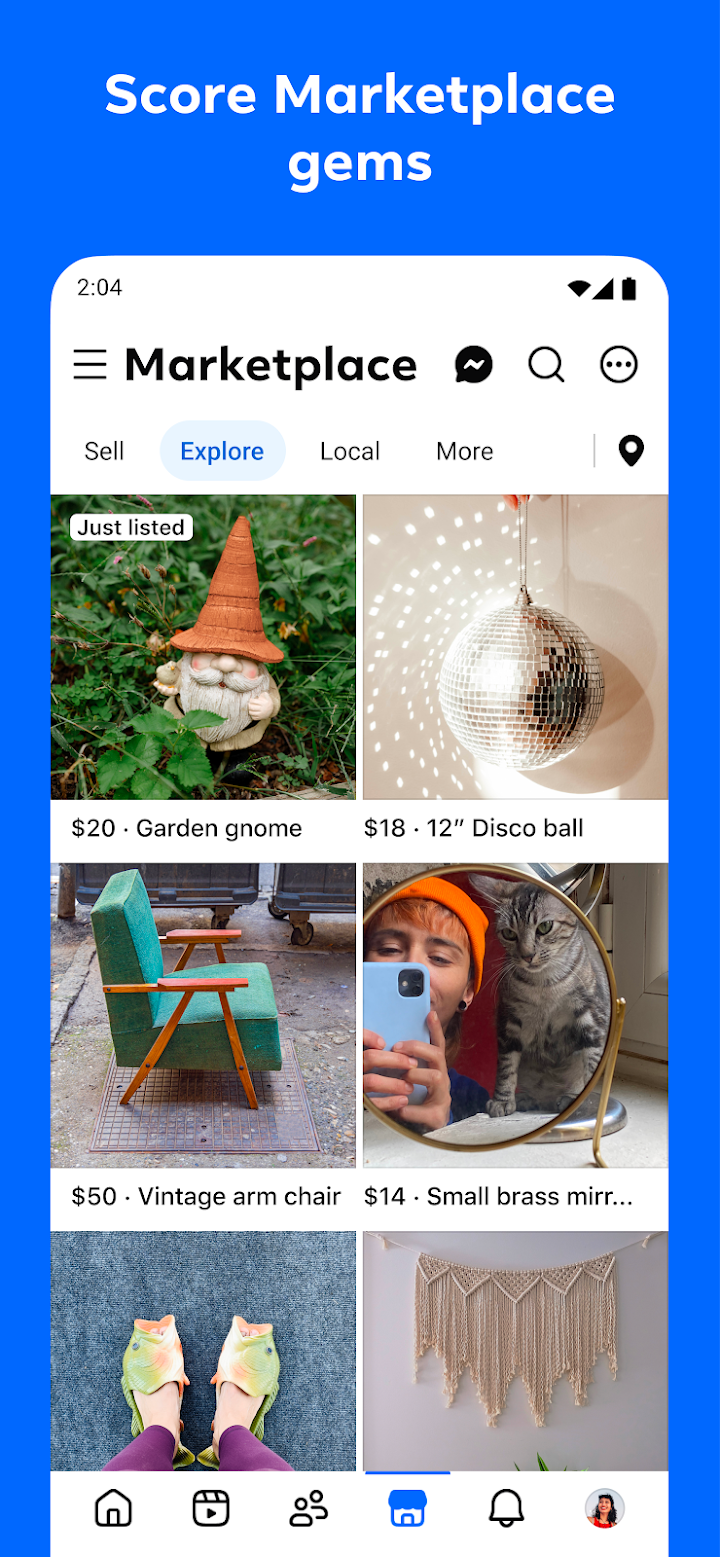
Marketplace is Facebook's local buy-and-sell feature, and it has become one of the most-used parts of the app. It works best for second-hand goods, furniture, vehicles, hobby equipment and anything where seeing the item in person matters.
How It Fits Together with Groups
Marketplace and buy-and-sell groups overlap deliberately. You can list an item on Marketplace and also post it to relevant local groups, which is often how sellers reach buyers who are not actively browsing Marketplace.
| Action | What It Does |
|---|---|
| List an item | Creates a Marketplace listing with photos, price and location |
| Save an item | Bookmarks it for later without messaging the seller |
| Message seller | Opens a private chat through Messenger |
| Mark as pending / sold | Updates the listing status for other buyers |
| Rate a seller or buyer | Builds reputation through completed transactions |
Safety Practices for Buyers and Sellers
Marketplace is a peer-to-peer system, which means the safety practices are largely yours to manage. The consistent advice from Facebook and from long-term users is the same:
- Meet in a public place during daylight, ideally somewhere with cameras or staff.
- Bring someone with you for higher-value items or unfamiliar locations.
- Inspect before paying. Do not send money in advance to someone you have not met.
- Be cautious of overpayment scams — the "I'll pay extra, refund the difference" pattern is a classic fraud.
- Keep conversations on the platform until you have agreed a deal. Moving to another app early removes the record of the conversation.
- Check the seller's profile age and reviews where available. A brand-new profile selling a high-value item cheaply is a warning sign.
Note on payments and shipping: Facebook offers buyer and seller protection for some transactions that go through its checkout and shipping options. Local cash-in-person deals do not have that protection, which is why the in-person safety rules matter more in those cases.
Reels, Stories and Video
Reels are Facebook's short-form video format, and they are one of the most prominent parts of the current app. You can watch reels that reflect your interests, share them privately with the people who will get the joke, or create your own.
| Format | What It Is | Lifespan |
|---|---|---|
| Reels | Short vertical videos, often with trending audio or templates | Persistent, discoverable |
| Stories | Photos and short videos shared with your chosen audience | 24 hours |
| Feed video | Standard video posts in the Feed | Persistent |
| Live video | Real-time broadcast with comments | Ends when the stream ends |
Creating Reels Without Much Effort
The app lets you create reels from trending templates, which is by far the fastest way to start if you have never made one. For more control, there is a full editing suite with trimming, text, stickers, effects and audio selection.
Practical creation tips:
- Use templates first. They handle timing and transitions, which are the hardest parts for beginners.
- Keep the first second visually interesting. Reels are judged in the first moment of scrolling.
- Use audio that is already trending if you want reach; use original audio if you want a specific identity.
- Check who can see your reels. Audience settings apply, and public reels are visible beyond your friend list.
Stories and Capturing on the Fly
Stories are for capturing moments quickly. They appear at the top of the app for 24 hours, can be shared with your full friend list or a custom audience, and can be archived so you keep a copy after they expire.
Worth knowing: Story audience defaults to your previous choice, not always to "Friends." If you previously set a Story to Public or to a custom list, that setting may persist. Check the audience before posting if privacy matters to you.
Meta AI and Generative Features
Facebook now includes Meta AI, which you can ask for information and get answers instantly, without leaving the app. The app also uses generative AI to let you create custom stickers and images, including the ability to reimagine existing images.
| AI Feature | What It Does | Practical Use |
|---|---|---|
| Meta AI chat | Ask questions and receive answers inside the app | Quick lookups, explanations, drafting text |
| AI stickers | Generate custom stickers from a prompt | Messaging and comments |
| AI image creation | Generate or reimagine images | Creative posts, jokes with friends |
| AI-assisted editing | Help with captions and content ideas | Faster posting workflow |
Two honest caveats. First, AI answers can be wrong, and they should not be relied on for medical, legal or financial decisions. Second, AI-generated images and stickers are increasingly common in feeds, which makes it harder to tell what is real — treat images on social media with more scepticism than you did five years ago, especially when they are emotionally compelling.
Meta AI and its generative features are not available in every country or region, so availability may vary.
Messaging and Calls
Facebook includes private messaging, which now runs on Messenger's infrastructure, plus voice and video calls. You can privately message relatable posts that only your closest friend will get, or share the reel everyone is talking about.
| Feature | What It Does |
|---|---|
| Direct messages | Private text chat with individuals or groups |
| Voice calls | Audio calls over the internet |
| Video calls | Group or one-to-one video calls |
| Sharing posts privately | Send a post or reel to a specific person or group chat |
| Message requests | Messages from people you are not friends with, kept separate |
The message requests folder is the most important privacy feature in messaging. Messages from non-friends go there rather than into your main inbox, and many scams and unwanted contacts start there. It is worth checking occasionally — and worth leaving alone unless you recognise the sender.
Encryption note: Facebook offers end-to-end encrypted chats in Messenger, but not all conversations are encrypted by default. If a conversation is sensitive, check the chat's encryption status before using it for anything you would not want stored on a server.
Friends, Following and Who Sees What
Facebook separates two ideas that most platforms merge: being friends and following someone. Adding new friends expands your world, but you also decide how closely to keep up with them.
| Relationship | What It Means |
|---|---|
| Friend | Mutual connection; can see content shared with Friends |
| Follower | Sees your public posts without being a mutual friend |
| Close friend | Added to a list that can be used as a post audience |
| Restricted | Sees only content you share publicly |
| Acquaintance | List that can be excluded from certain audiences |
The friend list feature is underused. Creating a "Close Friends" list and using it as an audience is a far better privacy solution than unfriending people or posting nothing at all. It gives you a private tier without the social friction of removing someone.
Profile Customisation and Audience Controls
You can customise your profile to choose how you show up and who sees your posts. This is the part of Facebook where a few minutes of setup genuinely changes your experience.
| Setting | What It Controls | Recommended For |
|---|---|---|
| Default post audience | Who sees new posts unless you change it | Set to Friends, not Public |
| Who can see your friends list | Visibility of your connections | Restrict if privacy matters |
| Who can find you by phone or email | Discoverability via contact details | Friends only, or restrict entirely |
| Who can send friend requests | Limits unsolicited requests | Friends of friends |
| Timeline tagging review | Approve posts before they appear on your profile | Enable |
| Story audience | Who sees your Stories | Set explicitly, not left to default |
| Two-factor authentication | Account security beyond a password | Enable for everyone |
Enable timeline review. It means nothing appears on your profile without your approval — including tags from friends and content from apps. It is a small setting with a large effect on how your profile looks to other people.
Safety, Privacy and Reporting
Facebook publishes its approach to community safety through the Meta Safety Center, and the app includes reporting and blocking tools across every feature. The practical points worth knowing:
- Blocking is stronger than unfriending. A blocked person cannot see your profile, message you or find you in searches.
- Restricting is a softer alternative. A restricted friend sees only your public posts and their comments need approval to be visible.
- Reporting is per-item. You can report a post, comment, group, page, message or profile from its menu.
- Snooze is the least confrontational option. It hides a person for 30 days without either of you noticing.
- Privacy Checkup in settings walks through the key settings in a few minutes and is worth running twice a year.
Facebook's terms, policies and safety resources are published publicly at the links in the final section of this guide. If you are setting up an account for a teenager or a family member, those pages are more useful than most third-party summaries.
Regional Availability
Facebook explicitly notes that some features may not be available in your country or region. In practice this most often affects:
| Feature | Typical Regional Variation |
|---|---|
| Marketplace | Not available or limited in some countries |
| Meta AI and AI image tools | Rolled out region by region |
| Reels monetisation and creator tools | Country-dependent |
| Dating features | Available in a limited set of countries |
| Payment and checkout options | Varies by region and currency |
If a feature you have read about does not appear in your app, checking regional availability should be the first step, not reinstalling.
Tips for Getting More Out of Facebook
- Train the Feed. Use Snooze, Unfollow and Hide rather than tolerating a feed you do not enjoy.
- Set your default post audience to Friends. Public should be a deliberate choice, not a default.
- Enable timeline review. Approve tags before they appear on your profile.
- Use Close Friends as an audience. It solves most privacy dilemmas without unfriending anyone.
- Check the message requests folder. It is where scams and strangers go, and it is easy to forget.
- Join a small number of active groups. Three engaged groups are worth more than thirty inactive ones.
- Search inside groups before asking. In large groups, most questions have been answered before.
- Treat Marketplace as a public place. Meet in person, in daylight, with someone else, and inspect before paying.
- Check Story audience before posting. The previous audience setting can persist.
- Enable two-factor authentication. Account takeover is the most common way people lose access to years of photos and contacts.
- Run Privacy Checkup twice a year. Settings change, and so does what you are comfortable sharing.
Who Should Use Facebook?
Facebook's usefulness depends heavily on whether the people and communities you care about are there. It is less a universal platform than a very large set of local and interest-based networks that share an app.
Facebook is a strong fit if you:
- Want to keep up with friends and family across distance
- Belong to interest, hobby or local community groups
- Buy and sell second-hand goods locally
- Follow creators and watch short-form video
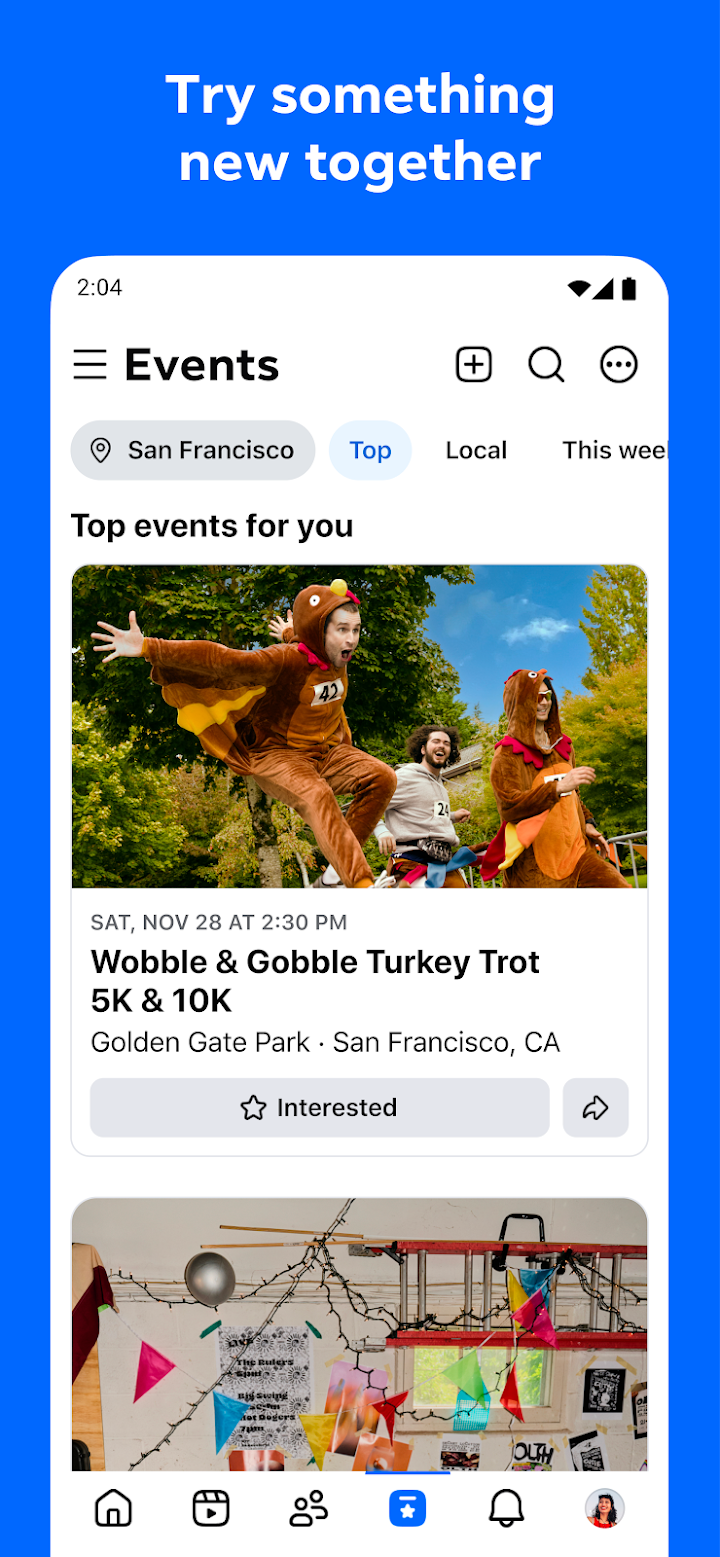
- Need events, local recommendations and community advice
It may not be the right choice if you:
- Dislike algorithmic feeds and prefer strict chronological timelines
- Want strong privacy by default rather than settings you must configure
- Prefer smaller, more private group chat over large networks
- Find the app's density of features overwhelming
- Are looking for professional rather than social networking
For most users, the sensible approach is to use Facebook for the two or three things it genuinely does better than anything else — groups, local marketplace and staying in touch with people who are not on other platforms — and to configure the Feed so the rest does not intrude.
Frequently Asked Questions
What is Facebook used for?
Facebook is a social network used for keeping up with friends and family, joining interest and community groups, buying and selling locally through Marketplace, watching short-form video through Reels, and messaging through text, voice and video calls.
Is Facebook free?
Yes. Facebook is free to use. There is no required subscription for the core features described in the app listing.
How does the Feed decide what to show me?
The Feed is a ranked selection of posts, reels, group activity, suggested content and advertising based on what you engage with. You can influence it using Snooze, Unfollow, Hide and Feed preferences to see more of what you like and less of what you don't.
Does unfollowing someone notify them?
No. Unfollowing stops their posts appearing in your Feed while keeping the friendship, and the other person is not notified. Snooze hides them for 30 days without any lasting change.
What is the difference between unfriending, unfollowing and restricting?
Unfriending removes the connection entirely. Unfollowing keeps the friendship but stops their posts appearing in your Feed. Restricting limits what they can see to your public posts and requires approval for their comments to appear.
Is Marketplace safe?
Marketplace is a peer-to-peer system, so safety depends largely on how you use it. Meet in public places, bring someone for high-value items, inspect before paying, avoid sending money in advance, and be alert to overpayment scams. Facebook offers protection for some transactions completed through its checkout, but in-person cash deals are not covered.
What is Meta AI and is it reliable?
Meta AI is an assistant inside Facebook that answers questions and can generate images and stickers. It is useful for quick information and creative tasks, but AI answers can be wrong and should not be relied on for medical, legal or financial decisions.
Are my messages private?
Messages are private in the sense that they are not posted publicly. Facebook offers end-to-end encrypted chats, but not every conversation is encrypted by default. For sensitive conversations, check the encryption status of the chat.
What are message requests?
Message requests are messages from people you are not friends with. They are kept separate from your main inbox and are a common route for scams and unwanted contact, so check them occasionally but respond cautiously.
Who can see my posts by default?
Your default post audience is set in your privacy settings. Many people leave it on the default rather than choosing deliberately, so it is worth checking and setting it to Friends unless you specifically want public posts.
How do I stop people tagging me in posts?
Enable timeline review in settings. It requires your approval before a post you are tagged in appears on your profile.
Why can't I see a feature mentioned in the app description?
Facebook states that some features may not be available in your country or region. Regional availability is the most common reason for a missing feature, ahead of app version or account settings.
Can I use Facebook to make voice and video calls?
Yes. Facebook supports voice and video calls through its messaging system, including group calls.
How do I create a reel?
You can create reels using trending templates for a fast start, or use the full editing suite for more control over trimming, text, stickers, effects and audio. Stories can also be used to capture moments quickly.
How do I delete or deactivate my account?
Both options are in Settings and privacy under Your Facebook Information. Deactivation hides your profile while keeping your data; deletion permanently removes your account, subject to a short grace period.
Is Facebook suitable for children?
Facebook requires users to meet a minimum age (13 in most regions). Parents should review privacy settings with younger users, restrict who can send friend requests, and decide the default post audience deliberately.
Download and Availability
Facebook is a third-party application developed by Meta and distributed through the official app stores. Feature availability, including Marketplace, Meta AI and creator tools, varies by country and region, and the app's terms and privacy practices are published by Meta.
Before relying on a specific feature, check the official listings and Meta's policy pages for the current availability in your region.
Official Resources:
- Official Website: Facebook Official Website
- Terms and Policies: Facebook Policies Center
- Privacy Policy: Facebook Privacy Policy
- Meta Safety Center: Meta Safety Center
Final Thoughts
Facebook's problem has never been a lack of features. It is that so many features are stacked in one app that most people only ever learn the surface. Groups, Marketplace and search are genuinely useful and genuinely underused, while the Feed — the part everyone sees first — is the part that most benefits from a few minutes of deliberate configuration.
The privacy model is the other area worth taking seriously. Defaults are reasonable but not personal, and the difference between a comfortable account and an uncomfortable one is usually a handful of settings: default audience, timeline review, friend request limits, message requests and two-factor authentication. None of those take long, and all of them matter more than any individual feature.
Use Facebook for the things it does better than anything else — local groups, local buying and selling, and staying in touch with people who are not elsewhere — and configure the rest so it does not intrude. The app becomes considerably more useful once you stop treating the Feed as something that happens to you.
Voyanta is an independent app discovery platform and is not affiliated with or endorsed by Meta. All Facebook and Meta trademarks and related intellectual property belong to their respective owners.